Rewards!

I spent most of last week feeling a little like Father Christmas. After several days of shopping, organising, card-writing and wrapping, I headed off to the Post Office on Friday afternoon with a huge stack of parcels.

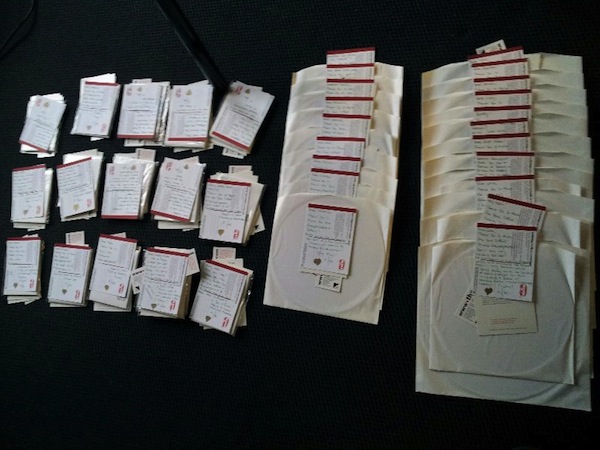
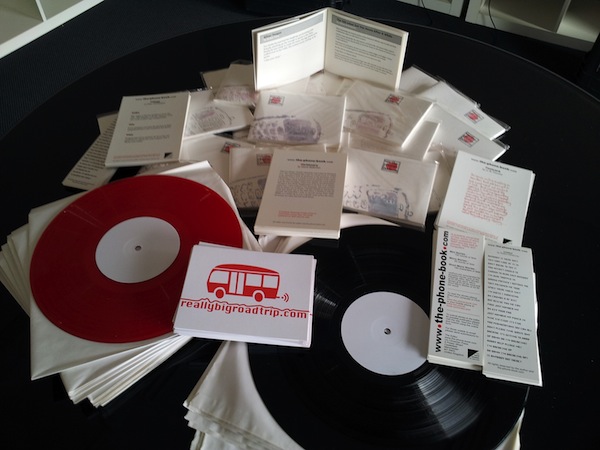
the-phone-book.com books, vinyls & postcards

the-phone-book.com books, vinyls & postcards

all organised & ready to parcel up

all organised & ready to parcel up

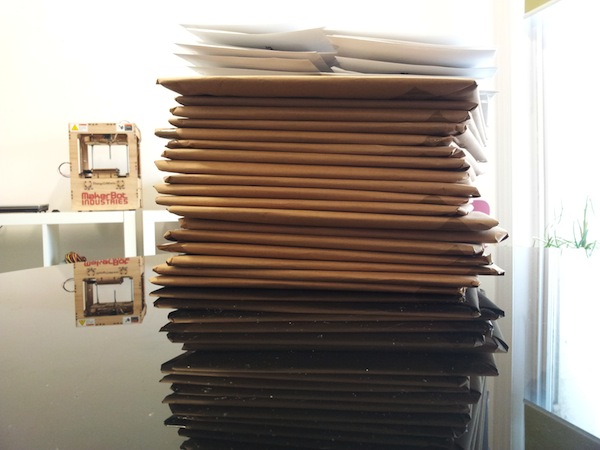
 ready for the post office

ready for the post office (& yes that is my Makerbot 3D Printer in the background!)

I posted 18 x books, 14 x red 10″ vinyls, 12 x black 12″ vinyls, 100 postcards/bookmarks (35 handwritten) and a 20 extra silly somethings (see below!). This all took sooooo much longer than I’d intended, but I do hope they’re enjoyed when they get there. A couple have already been delivered and photographed and I’ll add the rest to the comments below. It’s nice to know they arrived safely!

The extra silly something

Since the vinyls are white labels they don’t have covers so I was a bit worried about how they’d travel safely in the mail. Back in the UK I had special cardboard envelopes but they didn’t make it in the big move across the pond. I decided I needed to do something to reinforce the packaging & figured what better to reinforce vinyl than more vinyl? Much opshopping later and I had 20 oldschool records. Some are GOLD, and I honestly wish I could have kept a copy – so I photographed them.

[slideshow_deploy id=1305]

WTF is the-phone-book.com anyway?

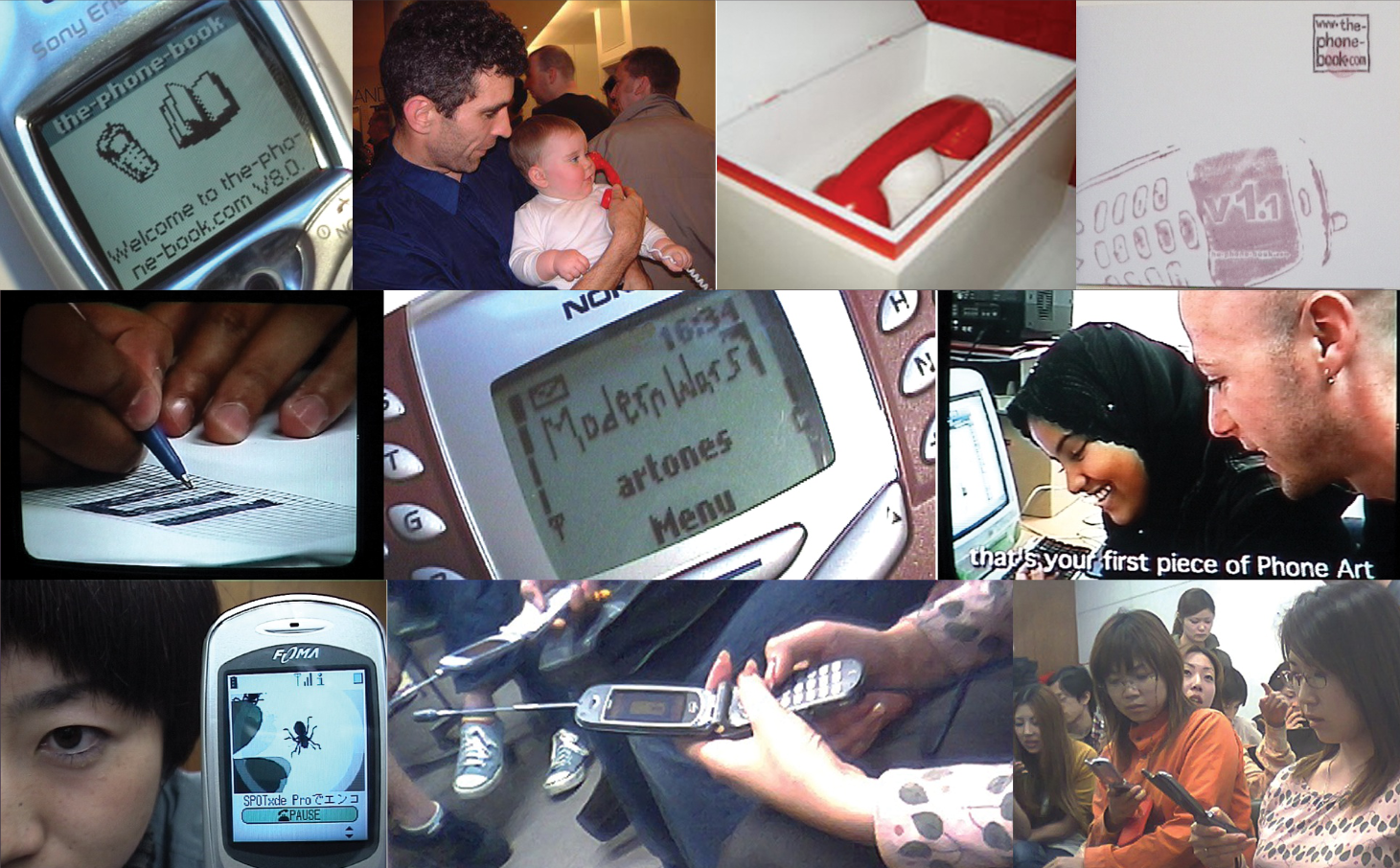
For those who don’t know the-phone-book.com, it was a project I co-created with Ben Jones and Ben Stebbing back in 2000. Remember “WAP”? It was a kinda of a crap LoFi mobile internet technology that could only hold about 150 words of text to each screen. So, inspired by the limitations of the platform, we commissioned writers to devise ultra-short-stories in 150 words or less, 50 words or less and 150 characters or less.

We published quarterly to our WAP mobile internet site and a website where we also hosted spoken word recordings of each story. The project lasted three years and amassed 935 stories written by 330 writers from 24 countries. It spawned a company called the-phone-book Limited which continued to empower artists to make creative use of the technology they carried in their pockets.

the-phone-book.com website closed several years ago but the wonderful waybackmachine archived a copy so you can still read the entire collection online. In fact this grab has a page all about the vinyls – a DJ scratch battle tool we made for Futuresonic in 2004. This page talks about the books that we made in 2002. There are CDs too but I’m sorry to say don’t have any in Australia.

I still have a handful of vinyl left but all the books are now gone *sob*. I hope you enjoy them with the love that we felt in making them all.

All the thanks

As well as all the awesome people who supported the project (check out this really big list of all the Pozible supporters!) I wanted to say thank you to ANAT for letting me turn them into a mailroom for several days. I also want to thank the lovely Jayne McRostie for kindly donating a whole bunch of wrapping paper from her gorgeous shop Presence on King William Road in Adelaide.

announcing the nomadic FabLab!

GET EXCITED AND LASERCUT THINGS (Moleskine edition)

Source: Matt Jones, photo by Matt Biddulph, lasercutter courtesy Umeå Institute of Design, Moleskine: model’s own. [image cc licensed A:NC:SA]

I have some fab (teehee) news! reallybigroadtrip is going to be a nomadic FabLab!

Some of you will understand exactly what I mean without me needing to say another word, but others will be thinking “WTF is she going on about?!”. This is why I didn’t just tweet it last night; I wanted to explain…

FabLab is short for “fabrication lab”. It was established by those brilliant brains at MIT’s Centre for Bits & Atoms (coz geeks use all the coolest words) to explore rapid manufacturing things like laser cutting and 3D Printing. There are now over a hundred of these labs all over the world.

Our closest one, in New Zealand, is hosting the International FabLab forum next week… and one is launching in Adelaide later this year!

That’s exciting enough… but it gets better…

Since Australia is such a big country, the wonderful folk at ANAT (and their awesome partners at DFEEST‘s Digital Economy & Technology department) have been looking at how to make this Adelaide-base more accessible to regional and remote Australia.

So… reallybigroadtrip is now the official nomadic FabLab! I’ll get a Makerbot (3D printer) of my own to drive around the country for people to use, and I’ll be sharing info about what these fabrication tools are capable of. Any of the awesome brains who come over to the Aussie FabLab HQ will have the option to come out to be Nomads in Residence with me. Whatever kit is available via the HQ can be accessed via me too – to if it’s portable I can tour it and if it’s not I can be the access point to send designs through and get the finished results shipped out.

Since wherever the bus goes I will be meeting like-minded folks, learning from them and sharing the word of geek, we’ll end up with lots and lots of little hubs of nerd, all over the country! Just imagine how much of a happy bunny I am right now!

So… who wants to play?

UPDATE April 2013: http://www.reallybigroadtrip.com/2013/04/nomadic-fab-lab-pt1/

Knit Along with Fee n Me

The very lovely Sayraphim Lothian is helping me learn how to turn my little-red-bus logo into gorgeous knitted toys. These will be sent to six of my wonderful crowdfunding campaign supporters – thank you so much for giving me the excuse to make something so totally brilliant!

Not only that, but Sayraphim is SO AWESOME that she’s open sourced the design. You can make your OWN knitted bus by following the lessons below. How fricken cool is THAT?! She started sharing the how-to-guides on my facebook page but then that Hugh Jackman thing happened and it all went a bit nuts, so I’ve pasted them here and will add to them as the lessons progress.

Want to join in? Please do, all welcome! And please drop in to ask questions, report any problems and share what you make. You can download this post as a PDF, post updates or pics on my facebook page or link to your work in the comments here :)

This is what we’ll be knitting:
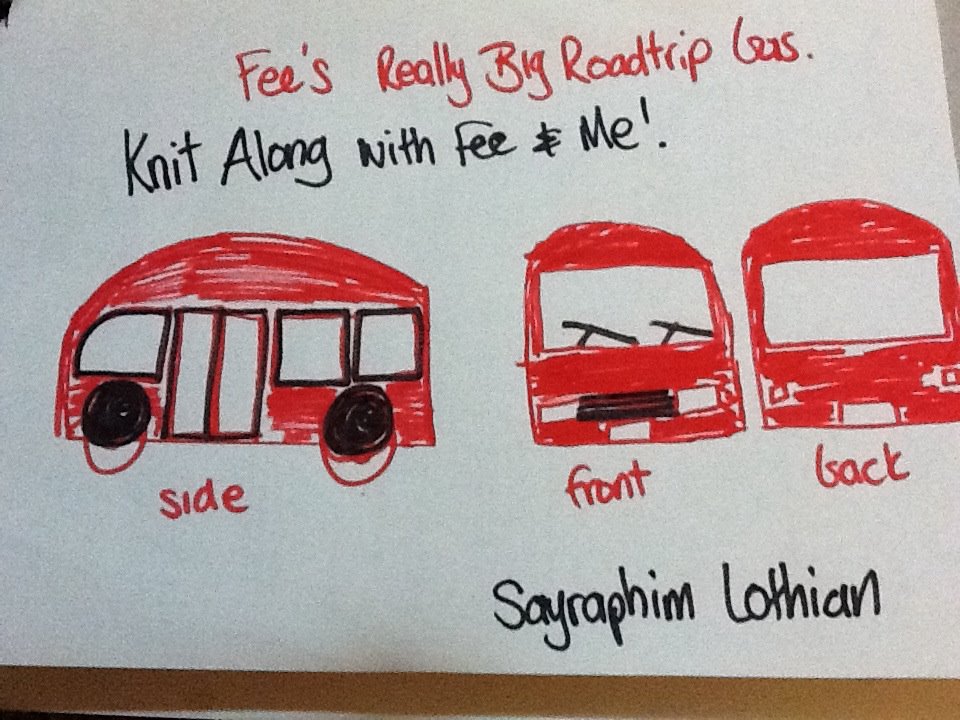
knitted bus sketch

knitted bus sketch

But before we start, some background and thanks.

I first met Sayraphim via the Freeplay Indie Games Fest a couple of years ago and we’ve been twitter-friends since. When I started tweeting about my new hobby, knitting, she got all excited and showed me some of the incredible work she’s been making over the years. I must admit my inner #knittingnerd went all-a-flutter at this one:
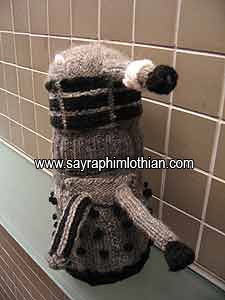
knitted dalek

knitted dalek

Thanks masses to Sayraphim and my sexy campaign supporters, obviously. But two other people need a mention. My fabulous little-red-bus logo was generously designed by James Hutson. Inspiration for even making a bus in the first place came from this fabulous photo and work by Leah Sutton via knitting community Ravelry:

(c) Leah Sutton

(c) Leah Sutton


Now for the good bit… Let the lessons BEGIN!

Prep time…
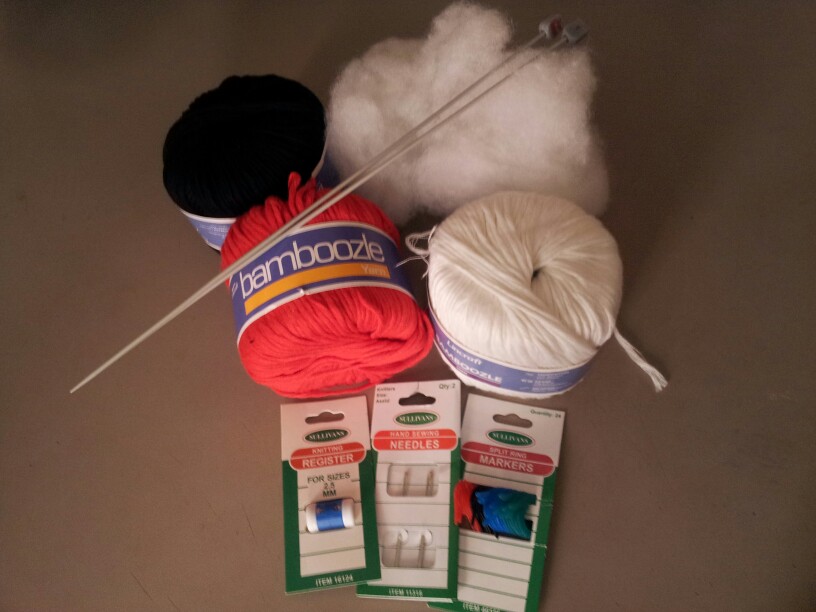
knitting kit

knitting kit (photo by Fee of the stuff I’m using, but use what you like)

hi guys! Ok, so as you know, Fee and I will be knitting her Big Red Bus on this page from Wednesday. But I thought we should start today with the stuff you’ll need to play along at home…

We’ll be knitting with red, white and black yarn, 8 ply, which is Sportweight in the US. We’re also knitting with 2(ish)mm needles, you can knit this with whatever you have, but smaller needles will make tighter stitches which means you will be less able to see the stuffing through the knitting. You’ll also need a few fistfuls of stuffing, a row-counter and a darning needle. So gather your supplies, find a comfy chair, make yourself a cuppa and we’ll see you on Wednesday night for the first installment of Knit A Bus With Fee And Me!

Part 1…

Ok, the first in the Knit Along w Fee n’ me instructions to knit your very own Little Red Bus… We’re starting with the bottom of the bus, so all Fee’s great technology doesn’t fall out when she goes over bumps…
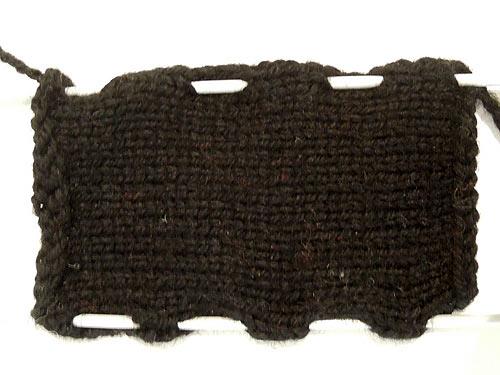
knitted bus bottom

knitted bus bottom

To knit the bottom of the bus is very simple.
Cast on 17 stitches in black.
Knit in stocking stitch (knitting one row, purling the next) for 37 rows.
Cast off.

Part 2…

And because black bus bottoms aren’t very exciting, I’ve cunningly knit up the second part of the bus for you to knit along at home with as well. This is the side of the bus, and you’ll need to knit two.
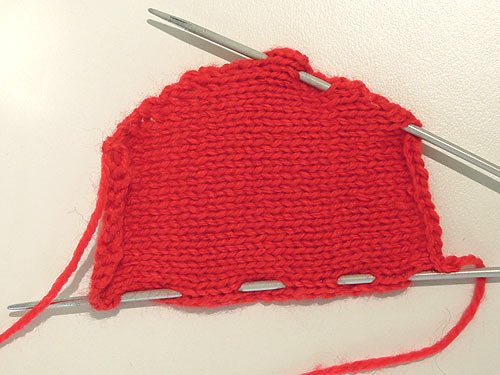
knitted bus sides

knitted bus sides

To knit the side of the bus is a little more complicated but not very. It’s knitting a gentle curve to make the top of the bus match Fee’s logo.

Cast on 14 stitches in red.
Row 1 – knit the whole row
Row 2 – purl the whole row
Row 3 – knit to the second last stitch, then increase by one (so you end up with 15 stitches)
Row 4 – purl the whole row
Row 5 – knit to the second last stitch, then increase by one (so you end up with 16 stitches)
Row 6 – purl the whole row
Row 7 – knit to the second last stitch, then increase by one (so you end up with 17 stitches)
Row 8 – purl the whole row
Row 9 – knit to the second last stitch, then increase by one (so you end up with 18 stitches)
Row 10 – purl the whole row
Row 11 – knit to the second last stitch, then increase by one (so you end up with 19 stitches)
Row 12 – purl the whole row
Row 13 – knit to the second last stitch, then increase by one (so you end up with 20 stitches)
Row 14 – purl the whole row
Row 15 – knit to the second last stitch, then increase by one (so you end up with 21 stitches)
Row 16 – purl the whole row
Row 17 – knit the whole row
Row 18 – Purl the whole row
Row 19 – knit the whole row
Row 20 – purl the whole row
Row 21 – knit the whole row
Row 22 – purl the whole row
Row 23 – knit to the second last stitch, then decrease by one (knitting two stitches together so you end up with 20 stitches)
Row 24 – purl the whole row
Row 25 – knit to the second last stitch, then decrease by one (knitting two stitches together so you end up with 19 stitches)
Row 26 – purl the whole row
Row 27 – knit to the second last stitch, then decrease by one (knitting two stitches together so you end up with 18 stitches)
Row 28 – purl the whole row
Row 29 – knit to the second last stitch, then decrease by one (knitting two stitches together so you end up with 17 stitches)
Row 30 – purl the whole row
Row 31 – knit to the second last stitch, then decrease by one (knitting two stitches together so you end up with 16 stitches)
Row 32 – purl the whole row
Row 33 – knit to the second last stitch, then decrease by one (knitting two stitches together so you end up with 15 stitches)
Row 34 – purl the whole row
Row 35 – knit to the second last stitch, then decrease by one (knitting two stitches together so you end up with 14 stitches)
Row 36 – purl the whole row
Row 37 – knit the whole row
Cast off.

You’ll need to knit two sides for your Little Red Bus and cleverly you knit them the same way.

Join us next Wednesday we’ll be knitting the front back and roof of the bus! Then there’s just some little windows and wheels and we’re away, Little Red Busses alongside Fee’s Really Big Roadtrip bus! WHOOO!

Part 3…

We’re knitting the back, top and front of the bus in one long strip.
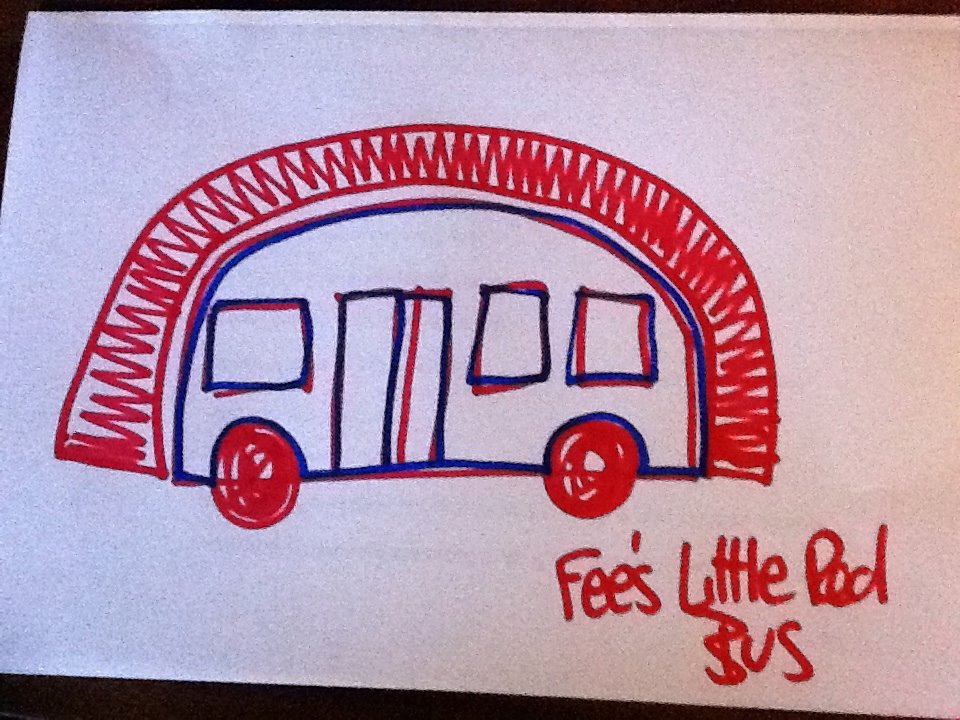
knitted bus back top & sides

knitted bus back top & sides

Cast on 17, the same as the bottom of the bus (which makes it a uniform width) and then knit 77 rows. This should make it long enough to be the back, top and front of the bus (though feel free to check it occasionally and adjust the length accordingly when you get it just right). I couldn’t photograph it properly because it kept curling up, so instead I drew this step for you.

Next, we’re sewing the top/back/front to both the sides… Ready?

Part 4…

Today is windows, windows, windows. Which are basically white squares and rectangles, but don’t tell anyone. We want them to think we’re super tricksie!

Ok, for the front windscreen:
Cast on 12
Knit (in stocking stitch) for 10 rows
Cast off
Repeat for back windscreen

For the side windows:
Cast on 6
Knit stocking stitch for 10 rows
Cast off
Make 5 of these

For the side doors:
Cast on 3
Knit stocking stitch for 17 rows
Cast off

Now all we have are the wheels, sewing the little red bus up and then a bit of decorative stitching. The Little Red Bus is almost there!

Part 5…

Ok, heading for the home straight! Now it’s time to make some little wheels for your little bus…

It’s tricky to get things perfectly round when knitting, so don’t worry. Your wheels, like my wheels, are going to be wonky and adorable and that’s ok.

Cast on 5
R1 – knit
R2 – increase each end (7)
R3 – knit
R4 – increase each end (9)
R5 – knit
R6 – decrease both ends (7)
R7 – knit
R8 – decrease both ends (5)
R9 – knit
Cast off
Make 8 of these
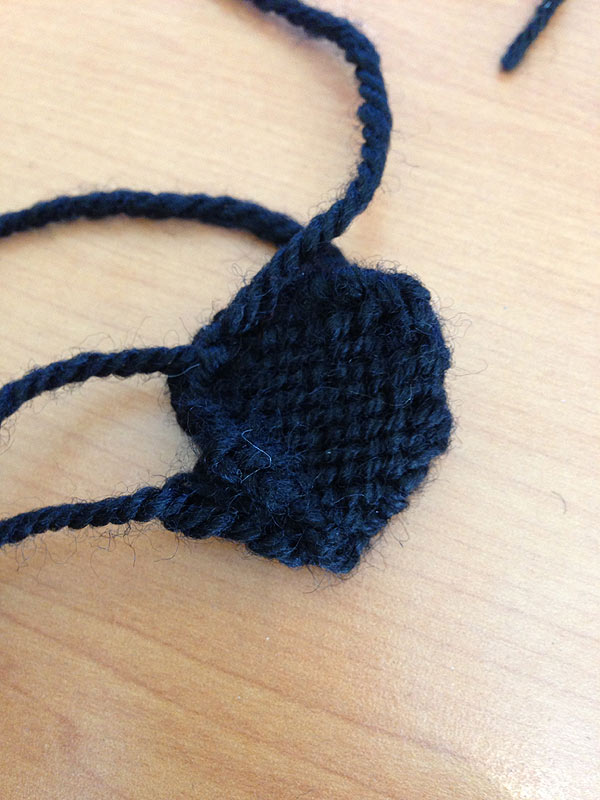
wheels1

two wheel sides placed together

You’ll need to make eight of these as we’re sewing two together to make the wheels thicker and firmer and hopefully able to take the weight of your Little Red Bus.

Put two little wheels together, right side in (remember, the right side is the little ‘v’s, the wrong side is the little ‘-‘s) and stitch around them, leaving a little non-stitched bit to pull them inside out.
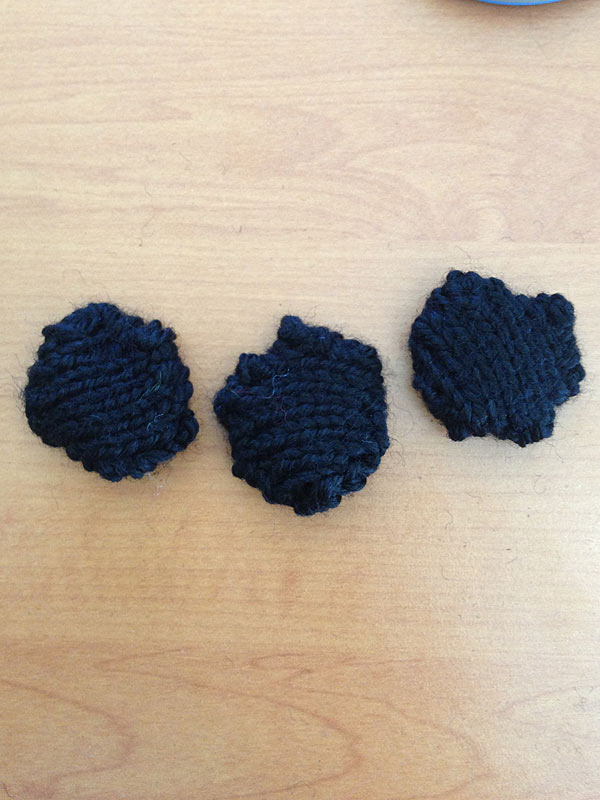
wheels2

three double-wheel sets

When you turn them inside out, run your finger or needle along the inside seam, to make sure it’s turned fully. You don’t need to stuff the wheels, They’ll hold up quite nicely as they are. Sew up the little hole you turned them through and then you can sew each yarn end into the wheel to tidy it all up.

wheels3

three double-wheel sets with white hubcaps

Hubcaps are really easy, I just took white yarn and stitched over and over in the middle of the wheel until it was covered and there was no black showing through.

Part 6…

Ok, so the last bit is sewing all your bus bits together. We’ll start with a Side and the Top.
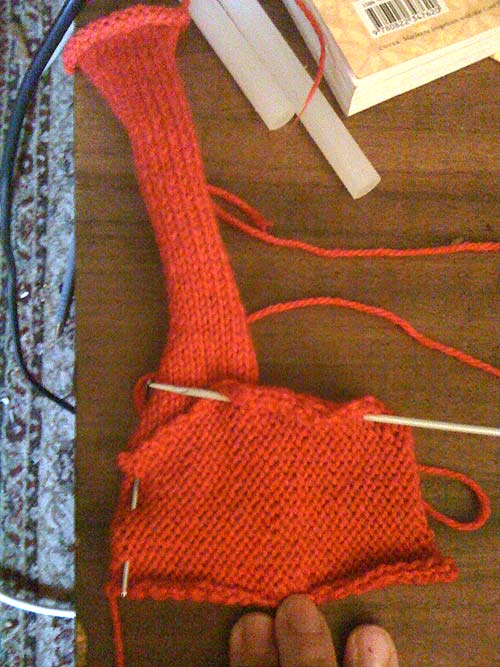
1_web

curving the arch of the side to the length of the side/roof section

Line up the corner of the long side of the Top with the corner of the arching line of the Side, with the right sides facing together. Ok, that sounds very confusing but check out the photo and hopefully it should all come clear. Don’t worry about the knitting needle in the photo, it was just to keep the knitting from curling up.
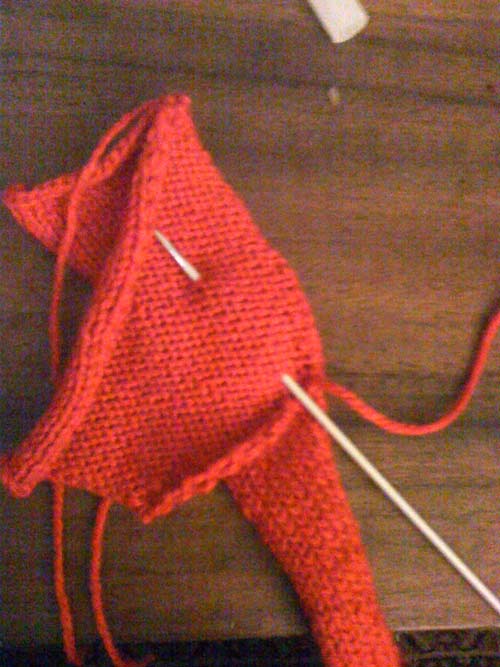
2_web

stitching the arch of the side to the length of the side/roof section


Now sew along the edge, bending the long Top piece around the arch as you go. It should be around the same length. If the Top is too long, don’t worry, we’ll just hide that bit inside the bus itself and no one will know.

Once the Top is sewn to a Side, sew the second Side to the Top in the same manner, lining up the corners and bending it around the arch. Once you’ve got that done, you’ll start to see the shape of the Bus (don’t worry about the white stitching you can see in the photo below, I got over excited and sewed a window on before I took the photo and then had to pretend that I hadn’t).
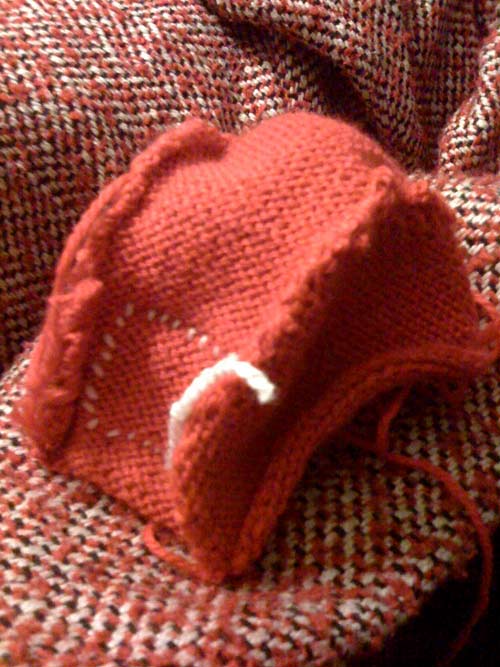
4_web

inside-out bus

So we’ve got our Sides sewn to our Top. The next bit is the little black Bottom.
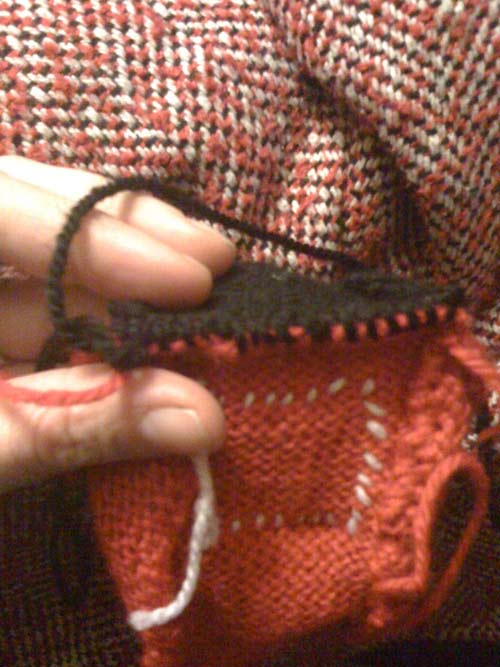
6_web

sewing the black base onto the inside-out bus

Again, line up the long edge of the Bottom with the long remaining edge of the Side and start sewing. I used a black yarn to sew, you can choose whichever you like (black or red).

Sew along the Long edge, then across the Short edge, then along the second Long edge, then stop.
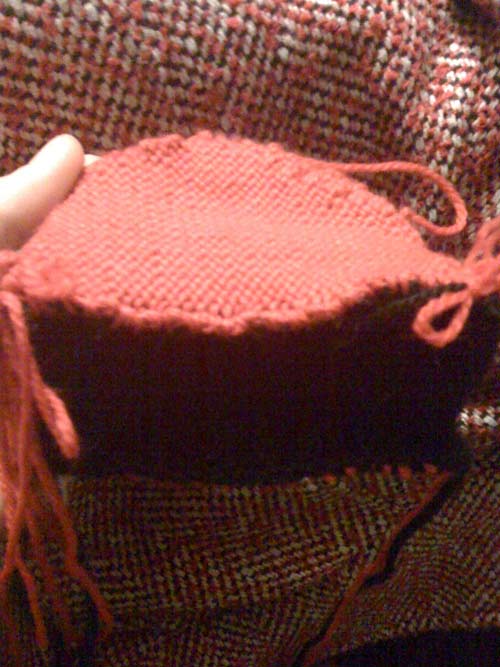
7_web

black base on inside-out bus

The last remaining Short edge we’ll leave open so we can turn the little bus inside out. Again, don’t worry about any yarn ends, they’ll disappear once we turn the bus inside out. Once you’ve turned it inside out, run your knitting needle along the inside of each seam to ensure it’s fully turned.

Now you can stuff your Little Red Bus. Don’t over stuff it, it’ll start looking more like a Little Red Ball if you do. Stuff it with little pinches of stuffing, rather than big handfuls – it’s the difference between using ball bearings and tennis balls to attempt to stuff something. One will only make tiny lumps, one will make big lumps with no chance of filling the space properly.

Once it’s stuffed to your satisfaction, you can sew up the Short Edge hole or fully enclose your Bus.

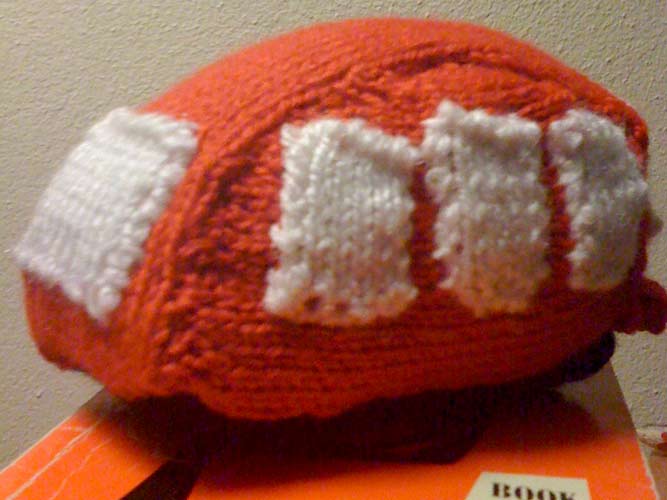
The second last task is to sew the windows on. The big squarish ones are the front and back windscreen, then on one side are the three smaller windows, the other side has two doors in the middle and a window either side.
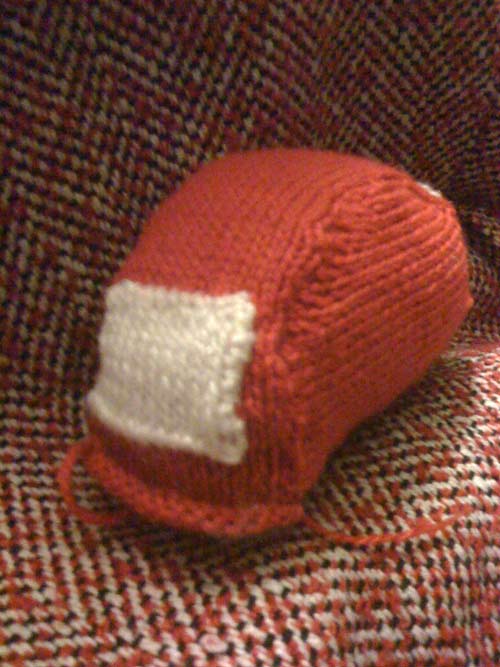
8_web

sewing windows on

9_web

finished windows, both sides

10_web

finished windows, both sides

The last task is sewing on the wheels. I positioned them with about half of the wheel against the bus and half below the bus. This was to ensure that the bus rested on it’s wheels and not it’s bottom. I sewed half the wheel on and then wove in the remaining yarn ends. This just means threading your needle with each yarn end, one by one, then stabbing the needle into the bus and pulling it out the other side. Any remaining thread hanging out of the second side you can cut off, as there’s a long yarn tail hidden inside the bus. Doing this, rather than just cutting off any yarn tails where they start, ensures that your knitting won’t unravel.

There you go! You’re now the proud owner of your very own Little Red Bus.
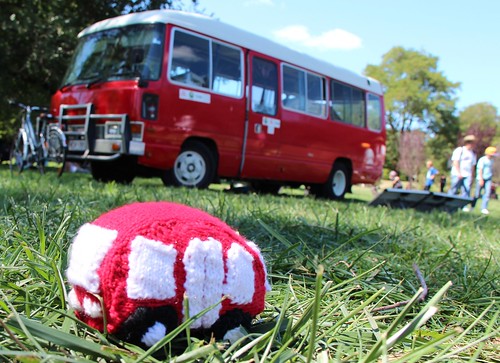
big bus, lil bus

Thanks for playing along at home!

Sayraphim x

[and thanks to Sayraphim Lothian for such a beautiful how-to-guide (which you can also download as a PDF). You can see more of her ‘random acts of guerilla kindness’ at http://SayraphimLothian.com and return the love by supporting her crowdfunding project, “Guerilla Kindness for Christchurch” by 16th February 2014].

Part Three: Belief.

Part three in a series of summary posts outlining what happened during my crowdfunding campaign. [Catch up on part one, “Why Crowdfund?” and part two, “Getting Started”.]

The more I talk about creative processes with other artists, writers and entrepreneurs the more the word “fraud” comes up. Apparently every one of us doubts our own creative ability, questions our role in society, worries about being ‘found out’ for making things up as we go along, and wonders if we shouldn’t just go and get a ‘real job’.

It seems we don’t advertise these thoughts much. Writing this blog post, sharing this ‘glitch in proceedings’, makes me feel quite vulnerable. It’s hard to know how much to keep in, what to leave out, how far back it all began – and whether all this navel-gazing isn’t just a bit too indulgent.

However… it’s been a vital part of my journey and ended up fundamentally shifting the focus of the project, so I think it’s important to put it out there. I’ve written up some general thoughts on rejection & creativity. This post is about belief as it relates specifically to my crowdfunding campaign.

Producer / Creative Producer / Creative

My mother was an illustrator, and also a single parent. Life wasn’t especially easy growing up, particularly where finance was concerned. She always said “if you can do anything other than be an artist, for heaven’s sake, do it”. I didn’t always listen to my mother’s advice (sorry mom), but it seems in this case those words had gotten through and resided much deeper than I ever realised.

I couldn’t help but work in the arts in some way. I started as a Stage Manager/Prop Maker in Theatre, then moved into Media Arts in a more Project Management capacity. Eventually I gave in to my inner Creative Producer, co-founding the-phone-book Limited. Somehow being the producer-type (facilitating or educating while still being creative) made it all excusable. You can earn some kind of a living helping other people to be creative; you’re buggered if you want to just create.

Creating a reallybigroadtrip

With the-phone-book I had often felt Ben was the clever creative one and I merely put the steps together to realise those ideas. After closing the company I was utterly broken & wondered if I wanted anything to do with Media Arts at all. Suffice to say over the following few years I went through a process of reflection, eventually giving myself some of that creative credit back.

In September 2011 I became a permanent resident on a distinguished talent visa & my Australia Council contract ended. I was free again, this was my chance to return to my creative roots and see what, if anything, might be there. I knew I loved performance, literature and technology and had a few ideas I wanted to develop. I knew that I loved to collaborate, but now I also knew that there was a solo artist ready to start on her own journey too. Scary but exhilarating.

I had nothing to lose; I had no mortgage or kids and being a single gal I didn’t even have to worry about what my partner might think about this reckless decision. I figured reallybigroadtrip would be a great vehicle (excuse the pun) for reconnecting with old networks and seeing what else was out there while I worked out what my own new work might be. I also knew I needed time to learn how to create again. I had been in a creative coma, spending many years repeating knowledge rather than researching and learning new skills. I was a newbie all over again.

My first crowdfunding video explains some of the background to why I created this project (it still makes me squirm to watch; videoing and editing yourself is one of the most horrible things I’ve ever had to do). The point is, I started out making a project that would document the amount of creative digital practice happening around Australia and beyond. I considered that to be an artwork in itself, but knew that was a contentious perspective. The safest focus was from the producer-side of my head – researching, documenting, analysing, reporting. My own creativity could come later.

Before even starting down the crowdfunding route I had applied to the Australia Council for funding (twice) and to NAVA for professional membership. Both rejected me. I hadn’t even started trying to become an artist in my new free life, but felt like I’d had the door closed in my face. I felt foolish, like a child who hadn’t been invited to a party but had cockily turned up anyway and now wasn’t in fancy dress like all the other guests. It was horrible. But I am strong old sod and believed that this awkward fumbling was just part of the process & I’d get over it.

Freelancing

My previous UK based freelance gigs had typically been consultancy, presentations and workshops. Sometimes I would be approached as a facilitator, offering technical troubleshooting around particular projects. Now freelancing again from this country under the technoevangelist banner I was expecting much of the same.

I knew the crowdfunding campaign was going to take up a lot of my time, but what I didn’t expect was that I wouldn’t want to work on anything else anymore. Presentations were fine, I really enjoy those. They gave me a chance to share some of my favourite media arts projects and promote reallybigroadtrip, perfect. Meanwhile offers of project facilitation, project management, digital strategy and social media jobs were coming up but I kept procrastinating, putting up walls, and turning the work down. Something was going on but I couldn’t work out what or why.

I hadn’t even given myself permission to make new work; I either didn’t know what work I wanted to make or didn’t have the skills to make the work I wanted to. I had been developing my arduino project with the help of the Hackerspace Adelaide crew, but it was slow going. I had so much to learn and was impatient.

I didn’t have any money and yet was fighting against myself to accept potential sources of income. I was trying to make but not getting anywhere fast. I was begging for money, making videos I didn’t like, demanding attention from all directions and staying in other peoples’ homes, while all I wanted to do was hide under a blanket. And I was supposedly following my bliss – WTF?!

The crash

I launched the campaign from Adelaide and (in line with my strategy) had so far directed most of the attention there. My next stop was Melbourne, where I was able to attend Next Wave Festival as an audience member. I was also presenting at Emerging Writers Festival. Both were my first visits to these festivals, despite knowing a few people involved with them or based in that fair city. I was looking forward to it; this was going to be a fresh start. I had launched a special series of rewards (the Melbourne Challenge) designed to maximise documentation opportunities and create noise around both the participating artists and my own campaign.

About a month into my campaign I arrived in Melbourne. And I freaked out. All those doubts about my own creativity flooded in like a Tsunami. Here was a bunch of real artists making and sharing their real work. What was I doing there? As I met new people, did I have the right to introduce myself as an artist? What could I show to explain my practice? What art was I even going to be making? My shyness took over and I wanted to hide from the crowds. I’d completely lost all belief in myself, my creativity, and the whole campaign thing. And absolutely no one had taken me up on a Melbourne Challenge!

Running the campaign over that time was hideous. If you don’t believe in you, how can you sell yourself and your vision to anyone else? I knew I had to make myself look like someone fun, creative, a worthwhile bet, while personally having no belief in myself at all. I really wasn’t a very happy bunny. Fortunately I was staying with some very dear friends who let me hibernate. I gave myself permission to be broken while I worked it all out.

The reveal

Eventually I realised what was happening, why I kept blocking myself, why I was so miserable. My subconscious had always been dominated by my inner-producer. I always knew what the producer would do. Now my subconscious was being taken over by my inner-artist. I had no idea what was going to happen next. My mum’s words had inadvertently created an inner battle.

It was war.

There was a petulant child stomping her foot. I wanted to make. Not just document other peoples’ work, or facilitate other peoples’ work. Make. My. Own. Work. It was all too easy to drop into facilitator role and so damned hard to be such a novice again (especially at my age!).

There was only one solution: shift the focus of the project. I was no longer “getting a bus, rigging it with recording equipment and driving around Australia documenting creative digital practice”. I was going to get a bus and drive around Australia making and sharing digital art with everyone I met along the way. Making art, not just documenting it. Such a simple, tiny change, but such a fundamental one.

Lesson Four: Trust yourself and listen to what your subconscious is telling you, even if it’s scary… in fact especially if it’s scary.

My biggest regret was not seeing as much of the work I wanted to catch at Next Wave. When I finally regrouped I felt a little silly, but I picked myself back up and went out. I talked to people about what had happened. I opened myself up and shared my pain, first privately with colleagues or during one of my favourite works at Next Wave (the Stream the Boat the Shore the Bridge, which made me cry). Then a little bit more publicly with my next video (below) and during my artist talk at Adhocracy. And now here.

In doing so I have discovered that WE ALL DO THIS. We all doubt ourselves. We all freak out. We all get frustrated by not being good enough, fast enough. It’s OK. It’s better than OK… because we’re fucking TRYING. This pain shows me I’m doing the right thing. I’m proud of it, and I’m proud of myself for both going through it and for sharing it.

So there.

And then I started knitting… a simple act of creating, making, that was productive, instantly rewarding and has connected me to a whole group of new beautiful friends. But knitting deserves a whole blog post of its own…

on rejection & creativity

the-phone-book Limited

Eight years before moving to Australia I co-founded an arts organisation called the-phone-book Limited with my then-partner Ben Jones. We had a grand mission statement – “create a sustainable source of revenue for the creative sector through mobile platforms and emerging technologies”. Sadly we were seven years ahead of our time in terms of commercially sustainable mobile markets (& crowdfunding didn’t exist like it does today), but that’s another story.

For the sake of sounding like an official commercial company we had job titles; his was “Creative Director” and mine was “Production Director”. Despite these titles we collaborated and created all our projects together, as artists. Even when I did freelance work elsewhere I generally only produced work I was creatively involved with, rather than just making other people’s ideas come to life. I basically considered myself to be a Creative Producer and didn’t think much more about it.

the-phone-book

the-phone-book

[NB: I closed the-phone-book in 2008. I haven’t gotten around to properly archiving those projects yet, but traces exist all over the internet. A bad clumping of those projects can be found for now at http://fonebk.com… excuse the mess].

Creative cravings

You can’t just rock up in Australia and expect to be able to live and work here independently, especially as an artist. So I got visa-sponsored employment through ANAT and then the Australia Council as an arts administrator with a creative bent. I created projects that enabled artists to make and share their own work. It was all a bit similar to what I’d been doing with the-phone-book Limited except I had less freedom & more money :)

The Australia Council work in particular was very administrative, as you’d expect. I’d found some space to be creative with the program I had built (Geek in Residence, Digital Culture Fund, etc) but I think there was a pressure-cooker scenario building. The less creative I could be on a day-to-day basis, the more my creative urges grew.

It was only in 2010, while running a locative media residency in Banff, that I realised I even wanted to be considered an artist.

By early 2011 I knew my contract with the Australia Council was coming to an end and had been in the country long enough to apply for permanent residency. I was pretty confident I could get another job, especially without that employer having to go through the long and painful process of business sponsorship visas. Or I could go freelance again. I figured I could probably find enough bits of work to keep a roof over my head, but I couldn’t ignore this little voice in the back of my mind, a creative craving. I wanted to make things again.

And so reallybigroadtrip & my new life as an independent artist began.

Rejection

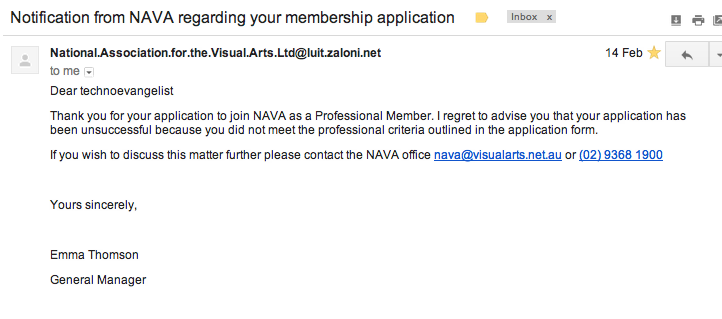
In February this year, now a permanent resident and freelance again, I applied to NAVA (National Association for Visual Arts) for Professional Membership as an artist. They rejected me – and on Valentines Day too, the meanies!

I must admit to being more than a little hurt. I had been rejected from funding applications before, but this was different.

NAVA rejection

NAVA rejection email

Despite several requests for feedback I still haven’t been told exactly why I didn’t meet the professional criteria (I certainly answered them all).

During one phone call I was told that I might be interested in a new administrators membership option. I wasn’t. I explained that I had definitely been more administrator than artist for the last four years, but that my application had also included a portfolio of work from the-phone-book Limited and beyond. That nice young lady promised to find out more about my application and have someone call me back. That feedback has never come, but maybe this post will encourage them to explain what I did wrong!

I did as I usually do and went to social media. A fascinating conversation ensued (here’s a few snippets)…

snippets from NAVA rejection conversation on Facebook [1]

snippets from NAVA rejection conversation on Facebook [2]

snippets from NAVA rejection conversation on Facebook [3]

snippets from NAVA rejection conversation on Facebook [4]

So I was left wondering, who gets to say whether or not you are an artist? Does the right to call yourself an artist have a limited duration? When does it expire? Does creating spaces where other people make content still constitute an artwork, and who within that process are the artists?

Who gets to decide what is or isn’t art, and who is and isn’t an artist?

Adhocracy2012

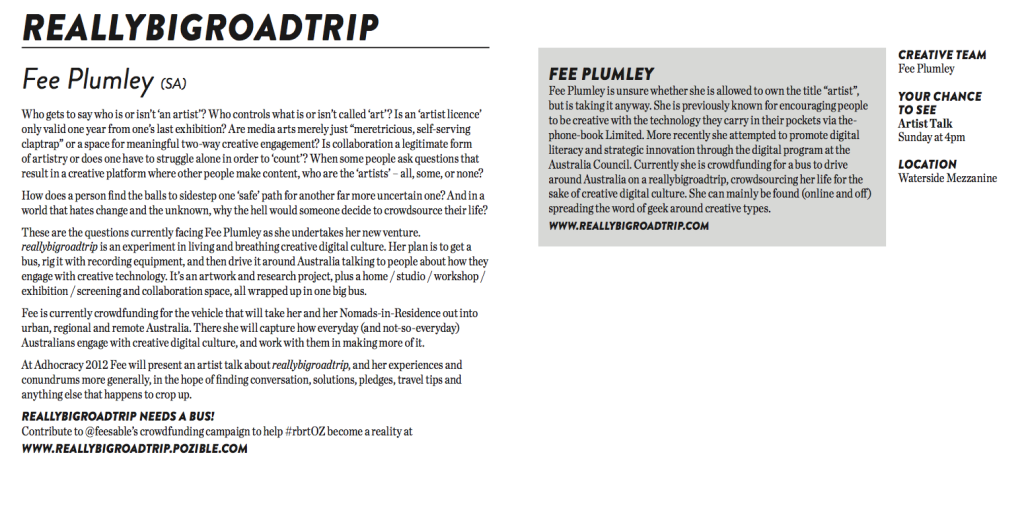
On the Queen’s birthday in June this year I was invited to give an artist talk at Vitalstatistix Theatre Company‘s residency, #Adhocracy2012. I decided this was the perfect opportunity to throw around some of these questions, and offer myself up to the crowd to decide: was I an artist?

artist talk description, #Adhocracy2012

This talk, and my process leading up to it, resulted in a slight – but vital – shift in focus for reallybigroadtrip as a whole. I’m therefore sharing my presentation slides for am i an artist? & a storify archive of the tweets that happened around it.


My talk was recorded so one day I’ll publish an edit of that, but until then you can watch a lovely mini-doco about the Adhocracy event as a whole:

Thanks

It turns out that had NAVA not rejected me I maybe wouldn’t have had such an intense reaction that became a raging desire to question my own creative value. I wouldn’t have felt the need to prove to myself that this was what I really, desperately, wanted to be. So I guess I have a lot to thank them for.

I also have to thank my social media friends and colleagues for listening to & supporting my impassioned rambling rants. I should especially thank Emma Webb and Jason Sweeney (and all the artists at Adhocracy) for giving me the platform to say what I needed.

It helped.